The island of 37 beaches · a practical guide
Where the island is, which country it belongs to, when to go, whether it’s safe, where to stay… All the answers from our team, who live right here.
French side
Marigot · euro (dollar accepted) · French and English
Dutch side
Philipsburg · dollar and guilder (euro accepted) · English and Dutch
Climate
Air 25–32°C (77–90°F) · sea 26–29°C (79–84°F) · dry season from December to April
Airports
Princess Juliana (SXM) and Grand Case (SFG)
All questions
Discover the island
Where is Saint Martin?
Which country does Saint Martin belong to?
French side or Dutch side: which to choose?
What currency and language?
What water activities are there?
And on land, what is there to do?
What natural sites can you explore?
What to eat in Saint Martin?
Getting here and around
How do you get to Saint Martin?
What documents do you need?
How do you get around the island?
When is the best time to visit?
Is there a hurricane risk?
What about sargassum?
Health and safety
Do you need any vaccines?
Is the tap water safe to drink?
Are there mosquito-borne diseases?
Are there dangerous animals?
Is Saint Martin safe?
Do you need sun protection?
Staying and investing
Which neighborhood should you stay in?
Can you invest in real estate in Saint Martin?
Practical info
Is there a time difference?
What voltage and plugs?
How do you make phone calls?
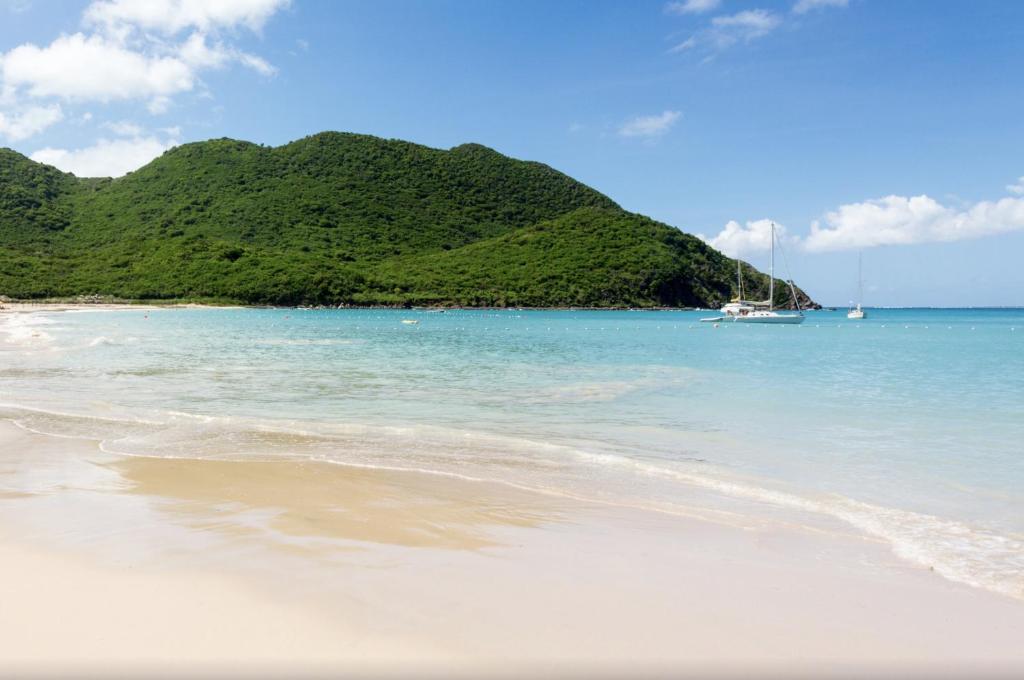
Saint Martin is an island in the Lesser Antilles, at the northern end of the Caribbean arc, with the Caribbean Sea on one side and the Atlantic Ocean on the other. It is one of the “Northern Islands,” along with St. Barts, Anguilla, Saba and St. Kitts and Nevis, all reachable by boat or plane for a day trip.
Both! Covering about 87 km², the island is shared between France in the north (Saint Martin, capital Marigot) and the Netherlands in the south (Sint Maarten, capital Philipsburg). The border is open: you cross from one side to the other with no checkpoint.
The French side, the larger of the two, has kept the feel of a Creole village: colorful houses, a nature reserve, islets just a few minutes away by shuttle boat, and refined French and Creole cuisine. The Dutch side is more urban and livelier at night, with its casinos, bars and duty-free shops.
The French side wins people over with its beaches, its laid-back pace, its food and its villages; the Dutch side with its casinos, nightlife and duty-free shopping. The island is small, so you can get from one to the other in half an hour: all our homes are on the French side, just minutes from both.
On the French side, you pay in euros, and the US dollar is accepted almost everywhere (at the merchant’s exchange rate). On the Dutch side, the US dollar and the guilder are used, and euros are accepted too. French is the official language on the French side and Dutch on the Dutch side, but English is spoken everywhere, as is Creole. You’ll also hear a lot of Spanish: the island is home to many Spanish speakers.
With 37 beaches and water between 26 and 29°C (79–84°F) all year round, Saint Martin is all about the sea: jet skiing, surfing, windsurfing, kitesurfing, paddleboarding, waterskiing, parasailing… Divers can choose from some fifty dive sites: wrecks, coral reefs, turtles and rays.
A few minutes from Cul-de-Sac, Pinel Island is perfect for a lazy day at the water’s edge; a little farther out, the wild island of Tintamarre has crystal-clear waters. By catamaran, you can also sail to St. Barts for its chic, Anguilla for its white-sand beaches, or Saba for its spectacular diving.
Boats and excursions: our partners →
Hike up Pic Paradis (424 m) for a view over the whole island, go horseback riding right into the sea, try ATVs or a zip line… In the evening, watch the planes skim over Maho Beach at sunset, then have dinner in Grand Case, the “culinary capital of the Caribbean.” On the Dutch side, Philipsburg and Simpson Bay draw fans of duty-free shopping and nightlife.
Created in 1998, the Saint Martin Nature Reserve protects more than 3,000 hectares of land and sea in the northeast of the French side, including Pinel Island and Tintamarre: a snorkeling paradise where you’ll swim alongside turtles and tropical fish. On land, the trails of Pic Paradis and Loterie Farm wind through the tropical forest.
The cuisine blends French, Creole and Caribbean flavors: grilled fish and lobster, accras (saltfish fritters), colombo curry, johnny cakes for breakfast, and guavaberry, the island’s traditional liqueur. Grand Case and its “lolos,” small seaside barbecue spots, are a must.
The island has two airports: Grand Case Espérance (SFG) on the French side and Princess Juliana (SXM) on the Dutch side, served by some thirty international airlines, with direct flights from Paris, North America and the neighboring islands. Cruise ships also call at Philipsburg.
All travelers arriving at Princess Juliana (SXM), whatever their nationality, must fill out the online entry form entry.sx a few days before their flight.
As for travel documents, it all depends on your arrival airport. At Princess Juliana, on the Dutch side and outside the Schengen Area, a valid passport is required, including for French citizens. At Grand Case (SFG), on the French side, a national ID card is enough for French citizens. US and Canadian travelers must show their passport.
You’ll be asked for the address of your rental on arrival: it’s in your booking confirmation. A few days before you arrive, we also send you the exact GPS location so you can find the home easily. Be sure to check the latest requirements with your airline before you leave.
The easiest option is to rent a car right at the airport. Scooters and motorcycles aren’t recommended, as the roads can be in poor condition. Taxis are available but must be booked in advance, and there are no ride-hailing apps.
The climate is tropical, cooled by the trade winds: air temperatures range from 25 to 32°C (77–90°F) and the sea from 26 to 29°C (79–84°F). High season, drier and busier, runs from December to April. The rest of the year, the occasional short shower passes quickly: Saint Martin is a year-round destination.
Like all of the Caribbean, the island is exposed to hurricanes from June to November. Not every storm becomes a hurricane, and few hit the island head-on. Since Irma in 2017, buildings have incorporated many safety features, and residents are warned several days in advance if a storm threatens.
In our homes, we give you the safety instructions and remain reachable throughout your stay.
This brown seaweed washes ashore in some years, mostly in spring and summer, and mainly on the Atlantic-facing beaches on the east side of the island. How much arrives varies a lot from one week to the next. The Caribbean Sea beaches on the west side are usually spared: if seaweed shows up, simply heading to another beach is often enough.
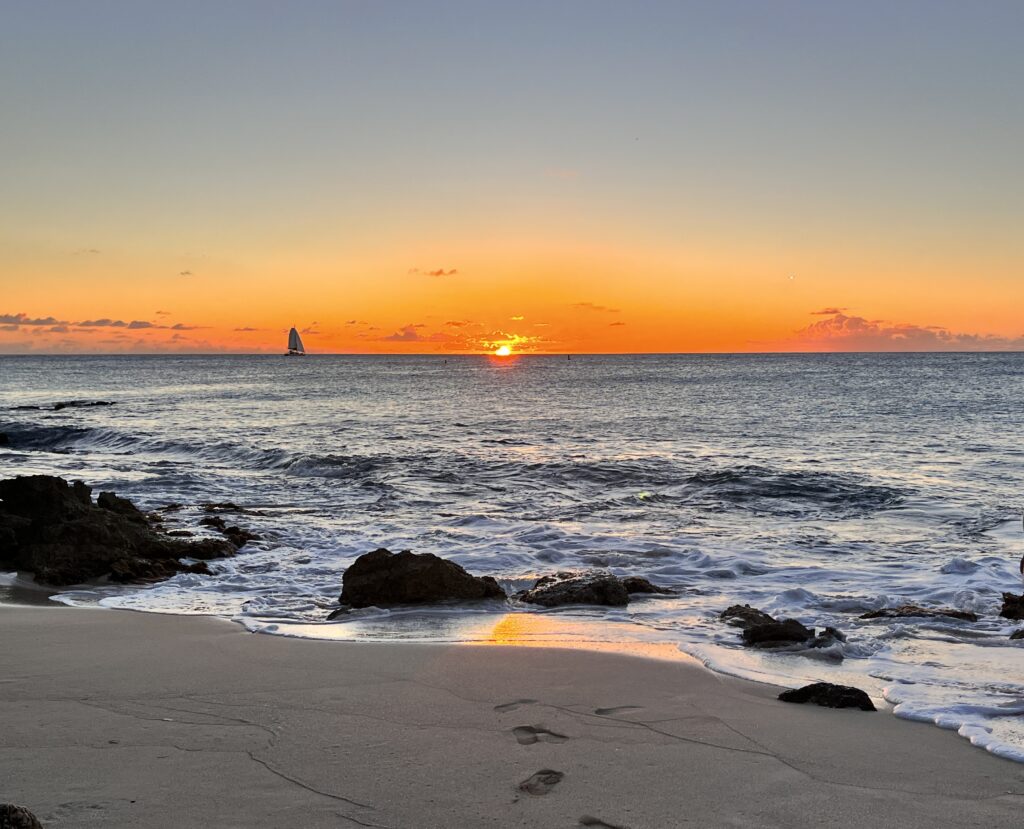
No specific vaccines are required: there is no malaria or yellow fever. Just check the current requirements for your country of departure before you travel.
The water comes from desalination plants and is generally safe to drink. Some residents drink it, often filtered; others prefer bottled water.
As in all tropical countries, cases of dengue can occur at certain times of year. Simple precautions are enough: insect repellent, long sleeves in the evening, and a mosquito net for little ones.
Not really. You’ll come across iguanas, goats, donkeys, a few stray dogs, and insects such as the centipede, whose bite is painful but harmless: remember to shake out your shoes and sheets.
Underwater, fish, rays and turtles abound. Sharks stay offshore and incidents are extremely rare: with sensible behavior, swimming poses no particular risk.
As in any tourist destination, theft can happen. Common sense is all it takes: valuables in the safe, shutters closed when you go out, nothing visible in the car, and caution at night in isolated or poorly lit areas.
On the road, be careful at night: street lighting is sparse and the pavement is sometimes uneven. We’re happy to help you choose a neighborhood that suits you: that’s the advantage of a team that lives on the island.
Yes: the trade winds make it feel cooler, but the UV index is extreme (above 11) between 11 a.m. and 3 p.m. Wear a hat and UV-protective clothing, use SPF 50 sunscreen and drink plenty of water.
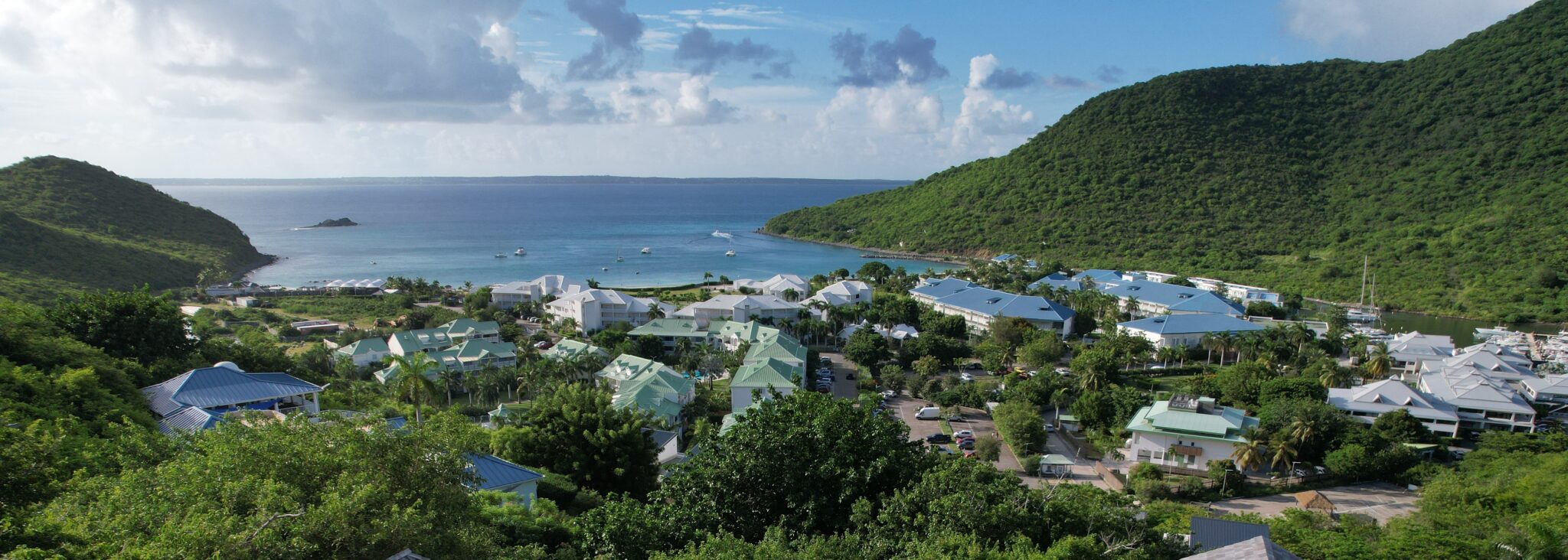
Orient Bay and Mont Vernon for the island’s most famous beach; Grand Case for its restaurants; Bellevue for lagoon views and sunsets; Cul-de-Sac for Pinel Island; Anse Marcel for the calm of a sheltered cove; Nettle Bay, between sea and lagoon, near Marigot.
Yes. Strong tourist demand makes vacation rentals a sought-after investment. The choice of property, its location and how it is operated make all the difference, as do financing and taxation, which are best reviewed with professionals.
Saint Martin is on UTC-4 all year round: 5 hours behind Paris in winter, 6 hours in summer. Compared with New York, it’s one hour ahead in winter and the same time in summer.
French side: 220 V and European plugs. Dutch side: 110 V and US plugs. Our North American guests may want to bring an adapter; shops on the island sell them too.
The dialing code is +590 on the French side and +1 721 on the Dutch side. Check your carrier’s international roaming terms; all our homes have internet.
• Saint Martin Tourist Office ↗︎
• We Are SXM ↗︎, all the island’s news and best spots
• Saint Martin, a destination growing in appeal: airports, traffic and tourism figures